
How to Brief a Voiceover Artist: 7 Things That Get the Right Read First Time

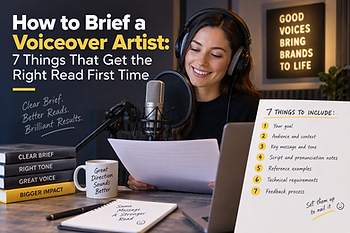
If you have ever received a voiceover that was technically fine but not quite what you pictured, the problem usually started before anyone pressed record. A voiceover artist can only perform what the brief gives them. The better the brief, the closer the first read lands, and the fewer rounds of changes you need.
I record from my home studio at broadcast quality, and most projects are delivered within 24 hours. That speed only works when I know exactly what you want. Here are seven things to include when you brief a British voiceover artist, so the first take is the right one.
1. Send a final script, not a draft
Lock the wording before you ask for anything. Every edit after recording means a new session, and small script changes often shift the pacing of the whole read. Read the script aloud yourself first. If you stumble over a sentence, a narrator will too, and it is easier to fix the sentence than the performance.
As a guide, a comfortable narration pace is around 150 words per minute, so you can estimate running time from your word count before you send anything.
2. Say who is listening and what you want them to do
A line that works for a conference keynote will feel wrong in a social ad. Tell your artist who the audience is, where they will hear it, and the one action you want afterwards: buy, sign up, finish the training module, trust the brand. That single sentence shapes tone more than any adjective.
3. Describe the feeling, not just the adjectives
"Professional and friendly" could mean a hundred different reads. Try describing a situation instead: "like a knowledgeable colleague walking a new starter through their first day" or "calm and reassuring, not an announcer". Mention what you want to avoid as well. It gives the performer a clear boundary.
If accent matters, say so plainly. My voice is neutral UK RP with a slight Scottish touch, which suits corporate, e-learning and documentary work where clarity and warmth both count. If you need something very regional, a good artist will tell you honestly and point you elsewhere. Listen to the demos first to check the sound suits your project.
4. Share a reference read
One example of a voiceover you like is worth a page of description. Send a link, and add a line on what you like about it: the pace, the warmth, the pauses. Do not ask for an exact copy. The aim is to point at a style, then let your artist bring their own voice to it.
5. Flag names, brand terms and pronunciations
Brand names, product names, acronyms and place names are the most common reasons for a retake. Mark them in the script and add a short note, or a link to an audio example of how you say them. Tell your artist whether an acronym is spoken as letters or as a word, and whether numbers should be read in full.
6. Give the practical details up front
Include the finished length, where the audio will be used, your deadline, and the file format you need. Where it will be used matters for pricing as well, because a voiceover for an internal training video and a paid advert are different jobs. My rates page explains how I work, and non-broadcast projects start at $275 USD. For a fuller breakdown of what affects the price, see the British voiceover cost guide.
7. Decide how you want to give direction
There are two common ways to work. You can send written notes after the first delivery, which suits clear, simple scripts. Or you can join a live-directed session, where you hear the read as it happens and steer it in real time. Live direction is available with me, and it is the fastest way to get a nuanced script right, especially for brand films and documentary.
When you give notes, be specific and keep them to a few points per take. "Slow down the middle section" or "make the last line sound like good news" works far better than "make it better". Performance-related revisions are free with me, so you can refine the read until it fits.
A simple brief you can copy
Use this as a starting point and fill in the gaps:
Project: what it is and where it will be heard
Audience: who they are and what you want them to do
Tone: three feelings, plus one thing to avoid
Reference: a link and what you like about it
Script: final version, with pronunciations marked
Length, deadline and file format
Session style: written notes or live-directed
Frequently asked questions
How long should a voiceover brief be?
One page is plenty. A short paragraph on the audience and tone, a reference, and a clean script will do more than a long document. Clear beats long.
Do I need to send a script before I get a quote?
Not always, but it helps. A script or a word count lets me work out the length and give you an accurate price. If you are still writing, tell me the rough length and where the audio will be used.
Can I ask for a different style on the same script?
Yes. If you are unsure which direction suits your project, say so in the brief. Because performance-related revisions are free, you can refine the tone until it fits, and a live-directed session makes that quicker.
How quickly can I get the finished audio?
Most projects are delivered within 24 hours. If you have a tight deadline, tell me when you send the brief so I can plan around it.
Ready to brief a British male voiceover?
Send your script and a few lines on your audience and tone to info@craigsvoicetalent.com, or book a call and we will talk it through. You can hear my range on the demos page first, and see how pricing works on the rates page.

Comments